Zero Waste Interventions
By Campus Planning & Sustainability | September, 2026
Scraps to Solutions: Zero Waste Interventions at the 2026 Staff Appreciation Picnic
At the 2026 Annual Staff Appreciation Picnic hosted by the Staff Assembly, Campus Planning & Sustainability (CP&S) worked with staff and students to host a Zero Waste event. At UC Irvine, Zero Waste is a big deal — it means diverting 90% of waste away from the landfill.
Organic waste in landfills releases methane (CH4), a powerful greenhouse gas that exacerbates global warming (EPA, 2026). Landfills are also known to release leachate, a toxic chemical slurry that contaminates surrounding groundwater. One way to avoid contributing to more methane in the atmosphere and contaminating groundwater is to compost organic matter. When composted rather than landfilled, the methane from the decaying organic matter can be captured and reused as energy and the resulting material can serve as rich fertilizer for local farmers.
UC Irvine’s Zero Waste targets come from the UC Sustainable Practices Policy and from the campus Climate Action and Adaptation Plan (CAAP). The CAAP outlines how UC Irvine will reach a 90% reduction in emissions by 2045 and how the campus will continue to adapt to the growing impacts of climate change. Since landfill waste contributes to the campus’s indirect, or Scope 3, emissions, addressing waste diversion and reducing overall waste generation is vital to meeting these goals. See our core interventions below!
Mobile Water Refill Station
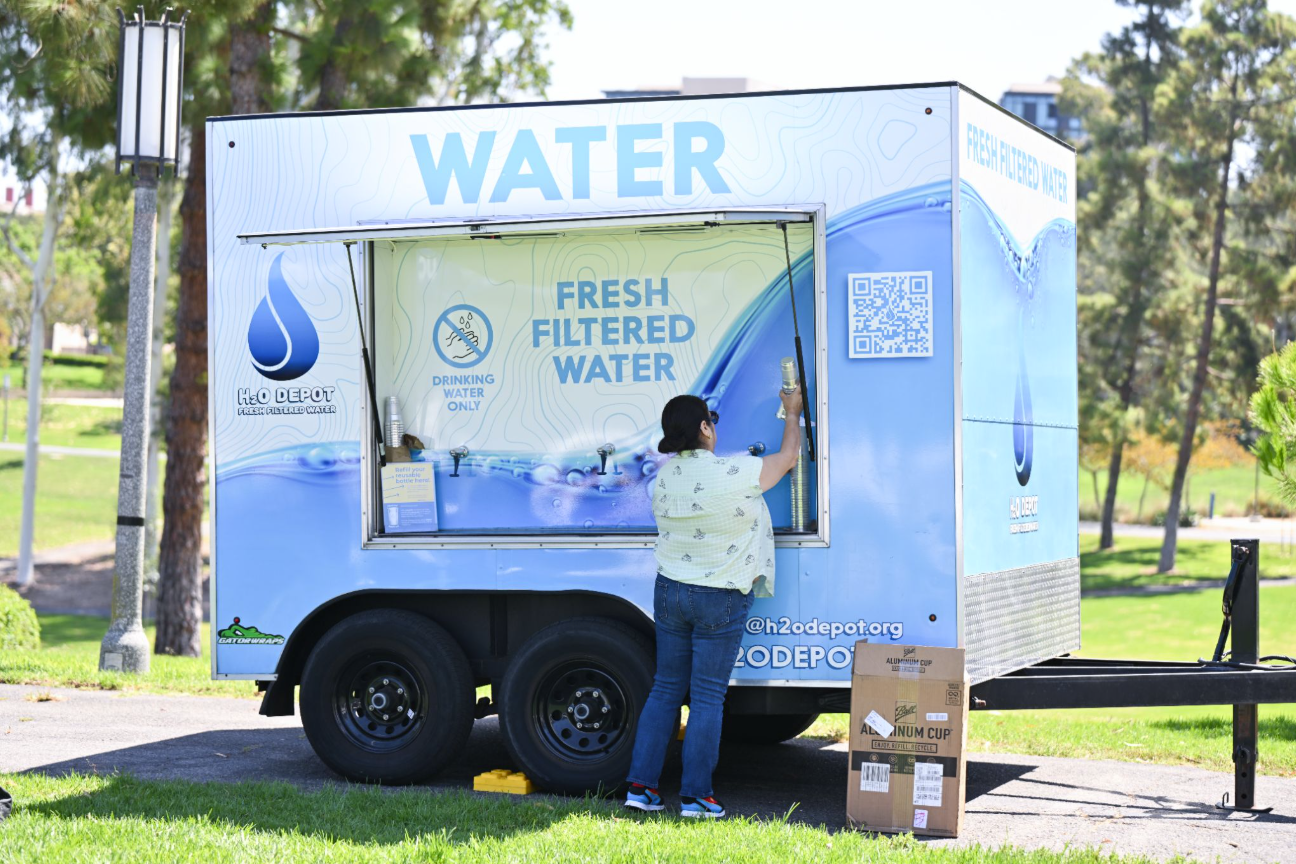
With those goals in mind, CP&S tested some interventions at the Staff Appreciation Picnic to figure out how to host the model Zero Waste event. The first was to pilot a Mobile Water Refill Station to reduce single-use disposable plastics. This station provided filtered water to attendees and offered reusable aluminum cups for attendees who didn’t bring their own reusable bottles. Attendees were encouraged to keep and reuse their cups or to return them to collection bins set up around the event. After returning, the cups were collected and sterilized for use at another event. This reuse model reduces both the amount of plastic the campus must purchase and the amount that ultimately ends up as waste.
The pilot was funded by the Single Use Plastics Reduction Grant, sponsored by the Global Climate Leadership Council (GCLC).
Trash Talkers & Waste Sorting
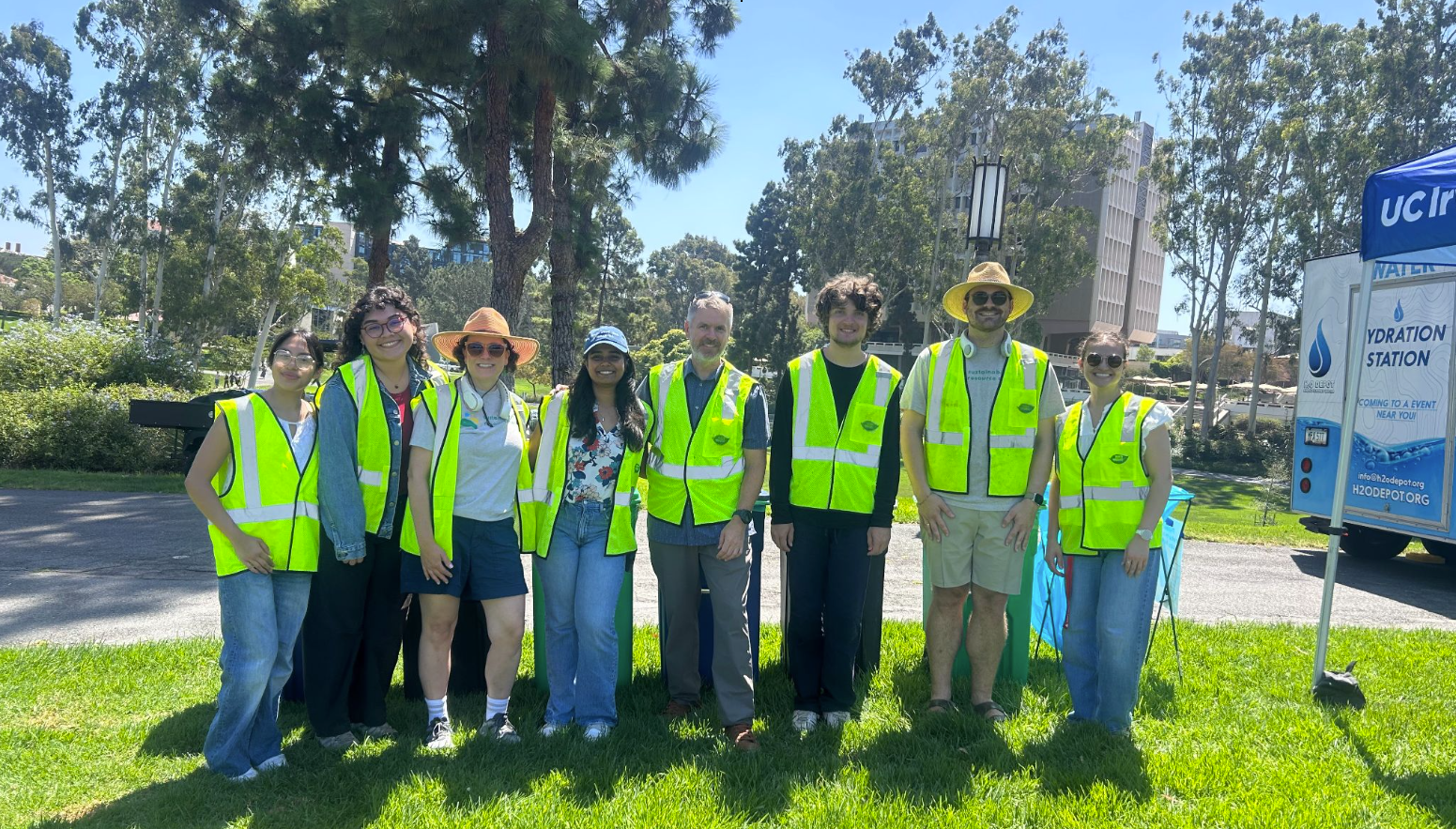
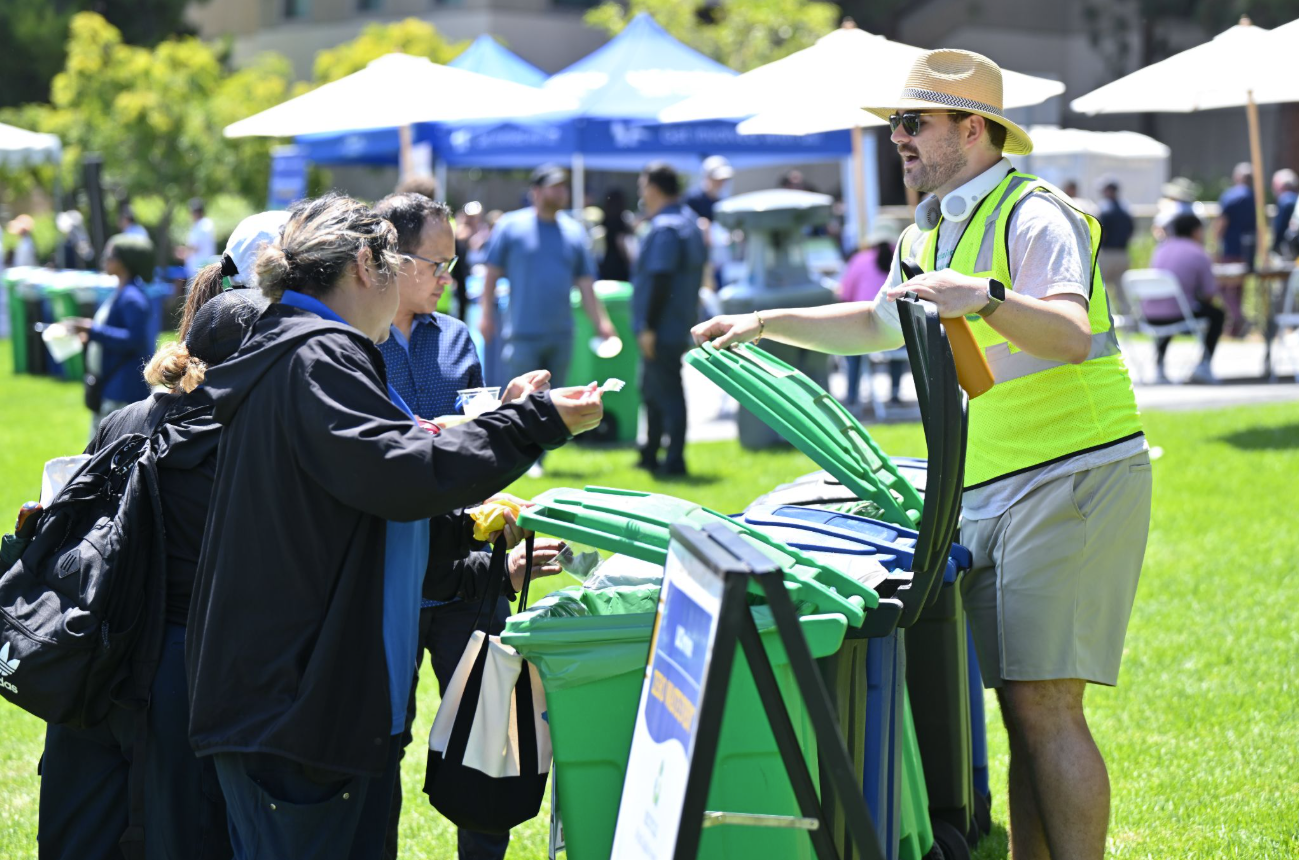
The second intervention was partnering with UC Irvine Housing and the Sustainability Resource Center (SRC) to deploy student and staff “Trash Talkers” who helped attendees sort their waste correctly. This guidance is important since waste sorting is a confusing topic that differs from municipality to municipality and even between the campus and the City of Irvine. On UC Irvine’s campus, all food and food-soiled paper is able to be composted — including meat, dairy, citrus, and pizza boxes — items which aren’t typically accepted for backyard composting.
UC Irvine sends its organic waste to the OREX facility in Sun Valley, where it is processed into a slurry over several weeks. Any non-biodegradable materials are sieved out. However, too much contamination from plastics and other non-compostables can result in the facility rejecting the load entirely.
What the Waste Audit Found
For an event like the Staff Appreciation Picnic, where the majority of waste is food scraps, compostable plates, and napkins, the overwhelming majority of the weight of the waste should ideally be compost. Based on a waste audit conducted at the end of the event, the Picnic produced around 960 pounds of waste total — 50% compost, 40% landfill, and 10% recycling.
Despite the Trash Talkers and event-specific signage, attendees frequently put their entire plate of food, napkins, and plastic cups into the landfill bin. Sorting correctly requires a conscious, intentional effort or pressure from another human being telling you what to do. Those extra few seconds at the waste station of lifting the lids and making decisions are a huge deterrent for encouraging correct sorting. Some of the challenges with the Staff Picnic as a Zero Waste event included:
- More waste stations than Trash Talkers — not every station could be attended 100% of the time.
- Language barriers with the Trash Talkers and event attendees.
- The close-top bins require one hand to lift the bin and one hand to hold and toss the waste, leaving no hands free to pick out utensils while still holding compostable materials.
- Imperfect event-specific signage that listed all the materials on one flyer rather than having separate flyers for each waste stream.
Looking Ahead
One solution to reduce the burden of sorting on event attendees would be to ensure everything (or almost everything) at an event is compostable. If the utensils, cups, and wrappers are all fiber-based products, the entire plate could be dumped into the compost bin. This switch to more sustainable purchasing can be facilitated by conscious event planners and by providing clear guidance on purchasing requirements and recommendations. However, the real, long-term goal is to create a cost-effective method of using reusable plates and cups to eliminate waste generation altogether.
Thanks to all those who volunteered to pilot these interventions at the Picnic! And thanks to everyone whose consideration and effort make UC Irvine a more sustainable campus!
Interested in helping out next time? Complete this short training to become a UCI Sustainability Ambassador!
Planning on hosting an event on campus? Check out this Green Events Guide created by UC Irvine Student Housing!